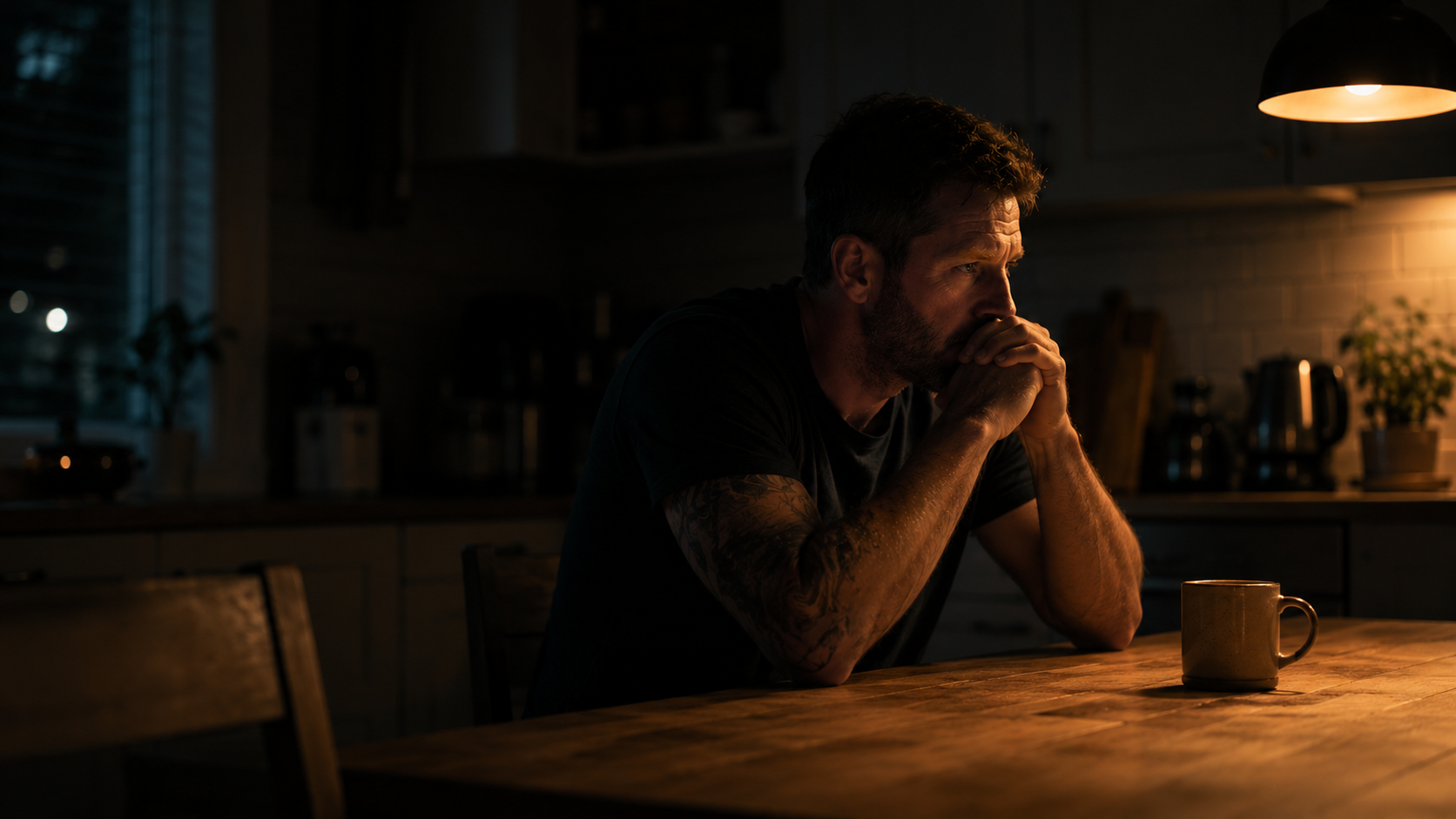
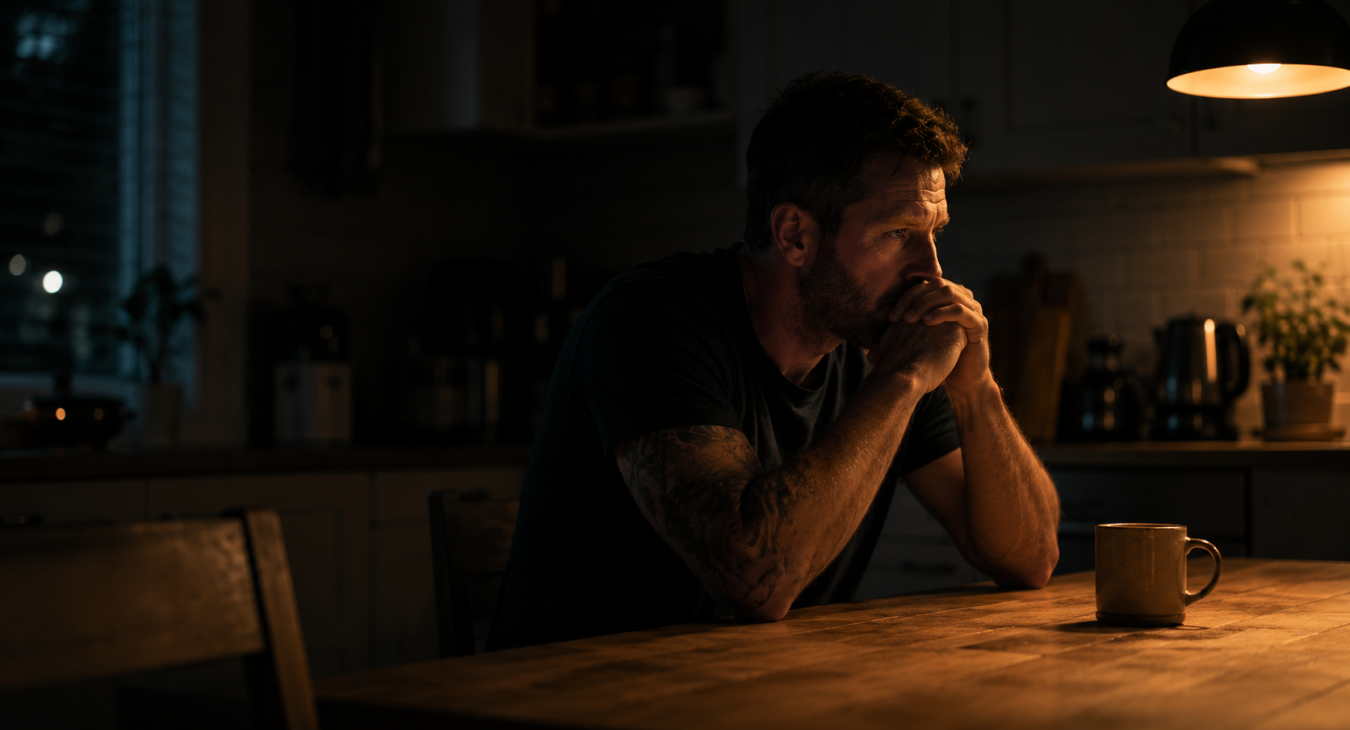
You snapped at your kids over something that wouldn't normally bother you or your heart's hammering before a phone call that used to feel routine or you're wide awake at 3am with your stomach in knots for no apparent reason. You tell yourself it's just stress, or you're just tired, or you're getting soft in your old age.
It doesn't occur to you that this might be anxiety, because anxiety isn't supposed to look like this. Right (not)?
It's supposed to look like nervous energy and excessive worry, or so you’ve been told. For a lot of men though it looks like anger instead. It looks like exhaustion you can't sleep off.
Research is only recently catching up to something many men have quietly known for years, that anxiety in men often shows up as a different pattern entirely, physical symptoms and a short temper rather than a racing mind. It's part of why so many men never get the chance to name what's actually going on, and it's part of why online counselling is starting to feel less like a last resort and more like common sense for men who can't work out what's wrong with them.
If any of this sounds familiar, why not book your initial session with me
What male anxiety actually looks like?
Anxiety is usually described a certain way, restlessness, excessive worry, a mind that won't switch off. That's a real experience for many of us, but it isn't the full picture for men. Some of the most consistent research on this points to something different, a version of anxiety that shows up mostly in the body and through anger. Chest tightness, headaches, muscle tension that comes and goes, a low hum of unease you can't name and can't switch off. Instead of worry you get irritability. Instead of tears you get a short fuse. Instead of talking about it you find something to fix, someone to snap at, or a job to disappear into.
This matters because it means a lot of men are anxious and don't know it. They have spent their whole life being shown the wrong list of symptoms. So they go to the GP with chest pains and get sent for tests that come back clear. They put the irritability down to being knackered, or just being wired that way. Nobody mentions counselling for anxiety because nobody, including the man himself, has connected what he's going through to anxiety at all.
The cost of not naming your anxiety
When anxiety goes unnamed it doesn't stay put, it leaks into everything else. Partners get the short temper after a stressful day at work. Kids learn to read their dad’s mood before anyone has said good morning.
Sleep gets worse, which makes the irritability worse, which makes the sleep worse again. Some men drink more in the evening, not because they think of it as coping with anxiety, just because it quietens their thoughts for an hour or two.
Socially it isolates you. Snapping at people, even in small doses, makes you someone people tiptoe around rather than someone people check in on. So the one thing that might actually help like someone asking if you're alright, becomes less likely the longer anxiety stays unnamed. It's a genuinely cruel loop, your anxiety pushes people away if you don’t take action, and this isolation will feed the anxiety right back.
What actually shifts in counselling for anxiety?
Counselling doesn't start with a lecture on anxiety, it starts with naming what you're actually feeling in your body and not sticking with the version of anxiety you've been told to look out for. For a lot of men that alone is the biggest relief, finding out the racing heart, the short fuse, and the 3am wake ups have an actual name.
From there it's about slowly loosening the grip anxiety has on how you react. Catching the moment before irritability turns into a slammed door. Understanding what your body is trying to tell you before it turn into something you can't ignore. It isn't about becoming a different person, it's about not being at war with your own nervous system every day.
Online counselling makes this more accessible than it's ever been. You don't need to sit in a waiting room or explain to anyone why you've got an appointment. You login, you talk, and slowly you build a different relationship with what's going on inside you.
If you're reading this because of someone else
Maybe you're not the one struggling. Maybe you're here because your partner, your dad, or your mate has been off lately, snapping more, sleeping worse, disappearing into work or the shed. You can't diagnose him and you shouldn't try, but you can make room. Skip the what's wrong with you and try something smaller, I've noticed you've seemed wound tight lately, I'm here if you want to talk. Men are far more likely to open up sideways, in the car, on a walk, mid task, than face to face in a serious sit down conversation. And if he won't talk to you, that doesn't mean he's shutting you out specifically, it might just mean a counsellor, someone outside the relationship entirely, is an easier first step for him.
Anxiety in men has been misread for a long time, mistaken for anger, tiredness, or as just being wired that way. But it has a name, and it responds to the right kind of support. If any of this sounds like you, or like someone you love, reaching out to a counsellor isn't a big dramatic step, it's just the next sensible one.
If you're ready to make sense of what's going on for you, book your first session with me
George Papachristodoulou. Qualified Psychotherapist
Frequently Asked Questions about Anxiety
Why do I feel angry instead of anxious?
Anger and irritability are common ways anxiety shows up in men, often more common than an obvious worry. It's the same underlying stress response, just expressed differently.
Can anxiety cause physical symptoms like chest pain or headaches?
Yes, physical symptoms are a core part of how anxiety presents in men, including chest tightness, headaches, muscle tension and disrupted sleep. It's always worth ruling out physical causes with your GP first, and then looking at anxiety alongside that.
How do I know if I need counselling for anxiety?
If irritability, physical tension, or poor sleep have been building for weeks rather than days, and it's starting to affect your relationships or work, that's usually a sign it's worth talking to someone rather than waiting it out.