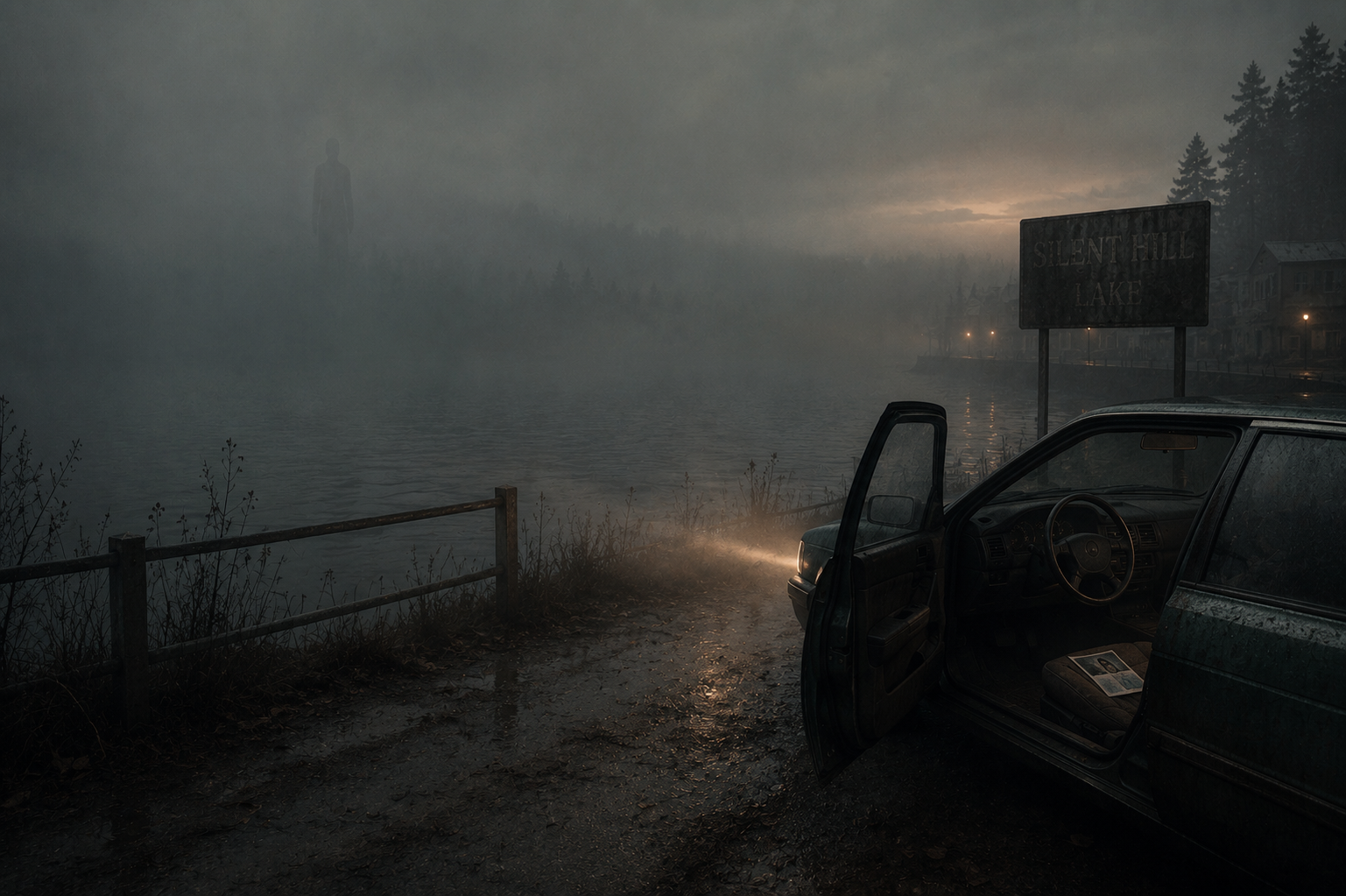
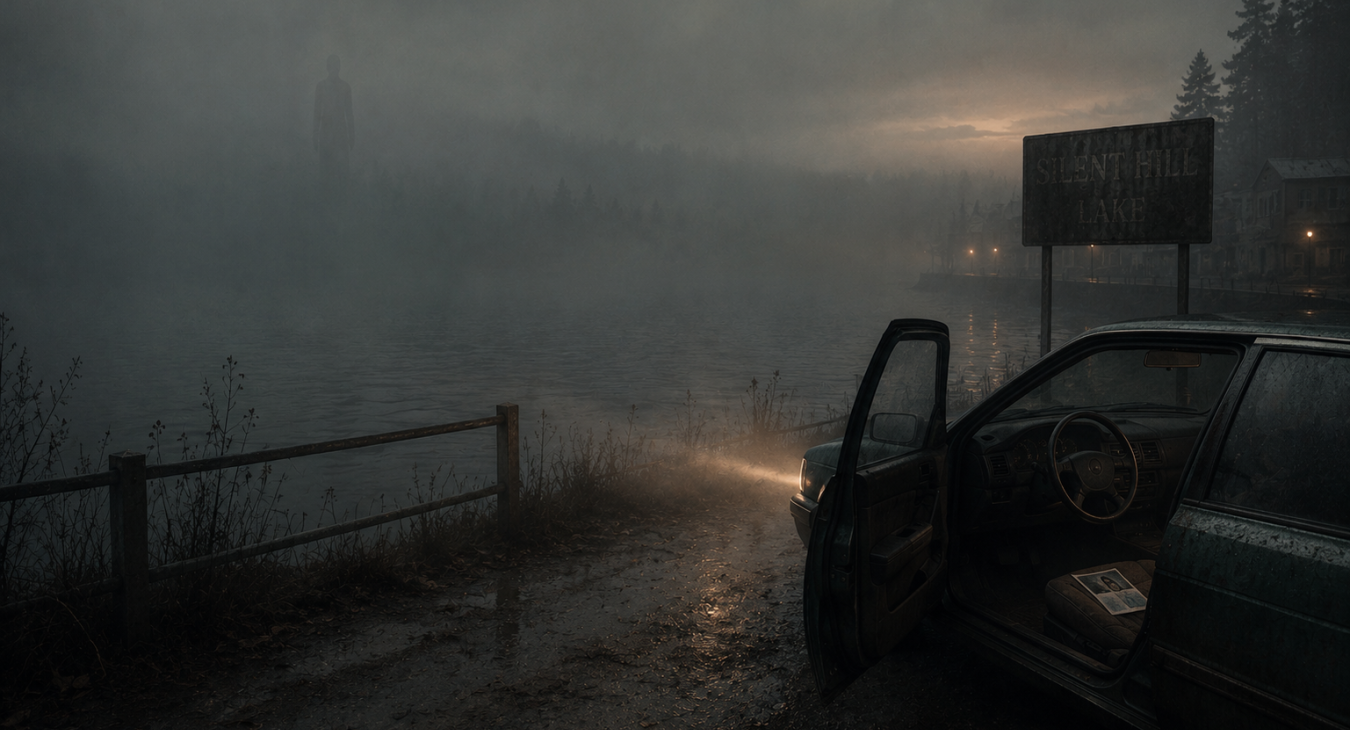
If you have played Silent Hill 2 more than once, chances are you have already seen James Sunderland walk out of that town in more than one way. I have already looked at the Leave ending and the In Water endings on previous blogs and both of them give you something final. Leave lets James accept what happened to Mary and walk away changed. In Water lets him sink, literally and metaphorically, into the guilt that has been eating him for the past 3 years (or 20).
The Rebirth ending is different. You never know if it worked or not.
James collects the items, performs the ritual and the credits roll with ambiguity rather than resolution.
Did he bring Mary back? Did he only convince himself he did?
The game doesn’t say, and this ambiguity to answer is exactly what makes it the hardest ending to sit with, and the most useful one if you grief a lost relationship, like a marriage, without the clean stop that death may offer you. If you have ever looked into online counselling because your own ending felt just as unresolved as James's, I hope you will resonate with this blog.
Just to be clear. This is my own understanding of the Rebirth ending. It is not something the game confirms, and it is not backed by any published research on video games and grief. But the parallel with what is called ambiguous loss is something that’s quite hard to ignore.
What ambiguous loss actually is?
Most grief models assume there is a death. Someone existed and now they don’t. Everything from the funeral to the sympathy cards exists to mark this threshold. Ambiguous loss is what happens when this threshold never gets drawn. The person you have lost is still alive. You might still see them, speak to them, hand your kids over to them on a Friday night but the relationship part of your identity built around is gone.
There is no funeral for a broken marriage.
Nobody sends flowers you because your ex moved forty minutes away or started seeing someone new. Divorce and separation sit inside this category, especially when kids are involved and contact never fully stops. You are grieving a version of fatherhood, a household, a future you had planned, and none of it comes with a death certificate to make the loss official. This is grief without closure, and it can hit just as hard as the grief due to a death, even though nobody died.
This is were the Rebirth ending of Silent Hill 2 can bring up a lot of emotions. You will never know how everything’s is going to be.
Why every other weekend dads feel this so hard?
If you only see your kids every other weekend, you live this ambiguous loss on a schedule. You drop them off on Sunday evening and the house goes quiet in a very specific way. Not the quiet of someone being gone forever, the quiet of someone being gone until next time. You might still see your ex at the school gate or in a group chat about football training, so your brain never gets to file this under finished. There is a concept from Kübler-Ross's stage model called bargaining, the urge to negotiate your way back to how things were. A lot of men recognise that pull to fix things, to win back the version of the family that used to exist.
Just a note here. Kübler-Ross’ model was built from interviews she had with people facing their own terminal illness, not from people grieving a relationship or a marriage. Treating her stages as a universal map for all grief, which is how most of us were taught to use it, stretches the theory further than she ever intended it to go. The impulse itself is real, even when we borrow her framework for something is was never built for.
The cost of grieving something nobody agrees has ended?
Tell someone your marriage ended and they will ask if you are okay for a week or two, then move on, because as far as anyone can see, nothing died. Nobody brings a meal round. Nobody checks in six months later. And because men are still expected to shrug this stuff off, get on with it and be strong for the kids, most of us do not even give ourselves permission to call it grief. So it gets pushed down, and it comes out sideways in the form of irritability. In one too many pints on a Friday when the house is empty. In a low level resentment that sits under everything and never quite gets named. The loneliness of the every other weekend dad is not weakness. It is unprocessed grief with nowhere to go.
What healing looks like without a confirmed ending?
This is where the Rebirth ending is genuinely useful. It never tells you if James got Mary back, and I think that is the point worth sitting with rather than a flaw to explain away. Healing from ambiguous loss does not come from getting an answer. It comes from learning to live inside the not knowing, from grieving a version of your life that will not get a final scene or a tidy resolution. This means grieving the marriage and the version of fatherhood you had, while building a new one that does not depend on the old one closing properly first. It means letting go of the bargaining, the urge to reverse what happened, and building a fatherhood that stands on its own two feet inside the schedule you actually have, not the one you lost.
You do not have to carry this alone
If any of this sounds like your Sunday evenings, you are not broken and you are not being dramatic. This is a real kind of grief. It just does not come with the usual markers, so most men carry it for years without ever calling it what it is. Online counselling can give you a space to actually name it, work through the bargaining, and start building the next chapter of fatherhood on solid ground.
George Papachristodoulou
Frequently Asked Questions
Is it normal to grieve a divorce the same way you would grieve a death?
Yes. There is no funeral or ritual to mark a divorce, but the loss of a marriage, a household, and a future you had planned is a real loss, and grieving it is a normal response, not an overreaction.
Why does divorce grief feel worse when you still see your ex at the school gate or handover?
Because the relationship never gets a clean ending. Seeing them regularly keeps the loss ambiguous rather than resolved, which is why it can drag on and feel harder to process than a loss with a clear finish line.
What is ambiguous loss in the context of divorce or separation?
Ambiguous loss is a term coined by the researcher Pauline Boss for grief that has no clear resolution, where the person is still present in some form but the relationship you had with them is gone. Divorce and separation, especially with shared custody, fits this pattern closely.
How do I stop grieving my old family and move on as a weekend dad?
Healing does not come from getting the old family back or from a tidy ending. It comes from grieving what was lost while building a version of fatherhood that works inside the time you actually have, rather than the one you are still bargaining to get back.